
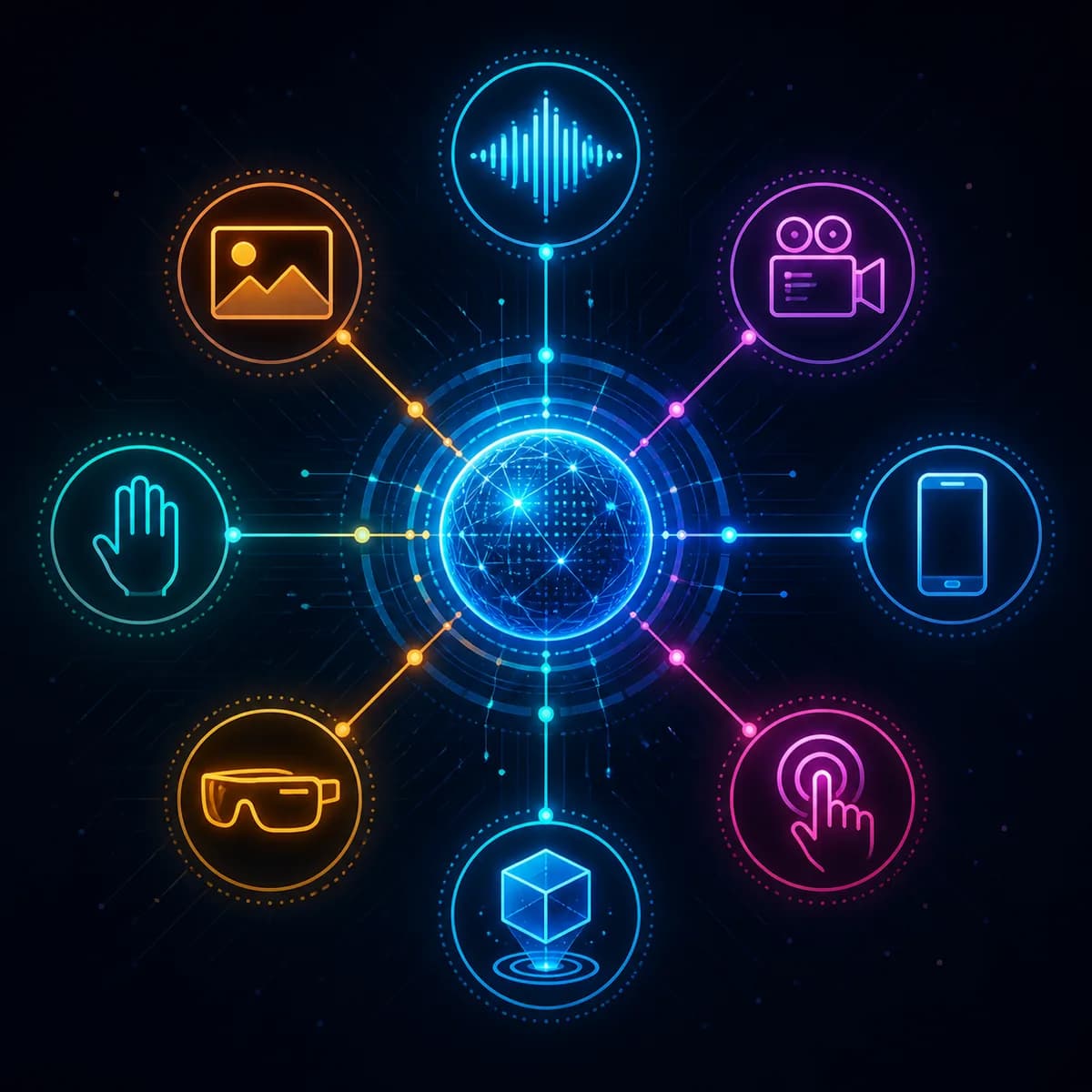
Multi-modal
How do text, audio, video, and devices work as one experience?
Information trapped in one medium
Meaning should move across senses and devices.
A conversation starts in chat, continues on a call, and ends as a document. Multimodal Meta-Layer design keeps context intact across those shifts.
Why this matters
A blind user cannot access a critical video update. A meeting recording never links back to the decision thread. Each medium is a dead end.
- Accessibility gaps
- Lost cross-media context
- Device lock-in
- Duplicated content labor
Today's challenges
- Format silos
- Weak captions and transcripts as first-class objects
- Device-specific apps
- No shared multimodal identity of a conversation
Why today's Web struggles
Products specialize by medium because media stacks and business units are separate. Continuity across modalities is an afterthought.
Text, audio, video, and devices remain siloed
Imagine instead
A single collaborative thread can be spoken, read, watched, or felt across devices without losing provenance or participants.
- Accessible equivalents by default
- Cross-device continuity
- Shared context objects across media
Seamless multimodal experiences
Why this matters to everyone
- Accessibility advocates
Make multimodal access non-negotiable.
- Educators
Teach across media without losing the thread.
- Creators
Publish once, reach many modalities.
- Developers
Target shared multimodal primitives.
Meta-Layer capabilities
- Multimodal
- Interoperability
- Context Overlays
- Presence
- Provenance
Real-world examples
- Education
Lessons that move from video to text to practice.
- Healthcare
Accessible multimodal care instructions.
- Meetings
Decisions linked across recording and notes.
- Field work
Voice-to-structured reports with continuity.
Join the challenge
Choose how you'd like to contribute.