
V1 readiness
3 of 11 items pass
Still open: both co-editor seats filled (fully staffed), coordinator in place, integrated changes published as a numbered ml-draft revision, chapter checked against neighbouring dps for terms, overlaps and conflicts, every must and should is testable or rephrased as guidance, all contributors acknowledged, no release blockers open from the readiness review, v1 candidate revision published before the freeze
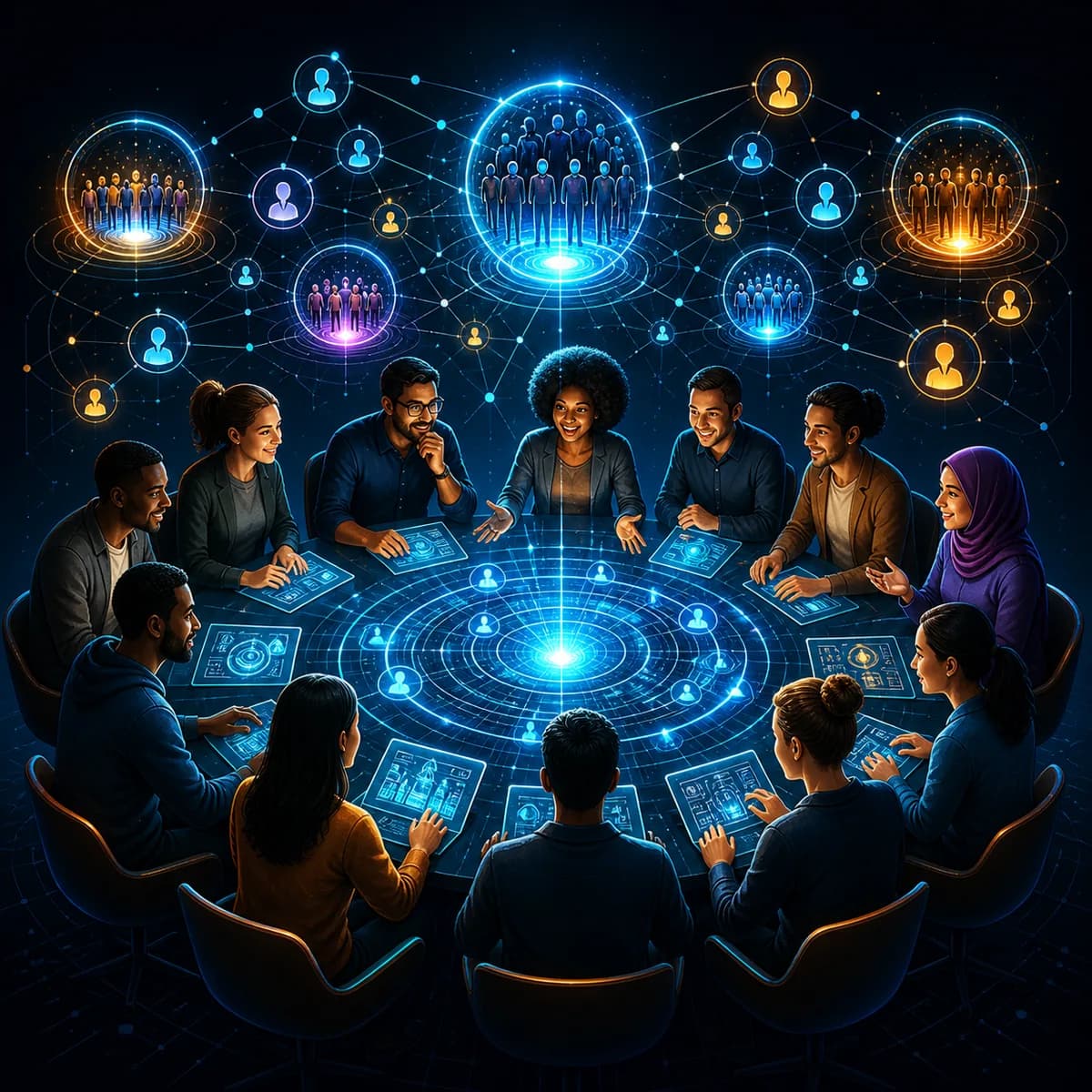
Collaborative Environment and Meta-Communities
How do communities persist beyond platforms?
Online communities constantly restart
A community should not die when an app changes its algorithm.
Groups rebuild the same social fabric every time they move platforms. Meta-communities keep membership, norms, and shared work portable.
Why this matters
A thriving forum is shut down. Members scatter to three new apps, lose moderation history, and spend months reconstructing trust that already existed.
- Platform eviction
- Lost history
- Fragmented membership
- Repeated onboarding labor
Today's challenges
- Hosted-only communities
- Non-portable membership
- Lost archives
- Split conversations
- No shared collaboration surface
Why today's Web struggles
Communities are features of products. When the product changes incentives or shuts down, the community has no independent substrate.
Communities are trapped inside platforms
Imagine instead
Communities exist as first-class objects on the Meta-Layer: members, charters, and collaboration follow the group across contexts.
- Portable membership and roles
- Shared workspaces above any page
- Continuity of culture and memory
Persistent communities that travel everywhere
Why this matters to everyone
- Community organizers
Keep groups intact across migrations.
- Educators
Cohorts that persist beyond a learning platform.
- Movements
Coordinate without a single point of failure.
- Developers
Build collaboration that is not host-bound.
Meta-Layer capabilities
- Meta-Communities
- Community Governance
- Presence
- Civic Memory
- Interoperability
Real-world examples
- Mutual aid
Groups that survive platform churn.
- Open source
Contributor communities across forges.
- Alumni networks
Lifelong cohorts with shared memory.
- Local civic groups
Neighborhood collaboration overlays.
Join the challenge
Choose how you'd like to contribute.